More Harvest, Less Certainty
Short-term gains in crop production in Pakistan are being offset by water stress and climate volatility.

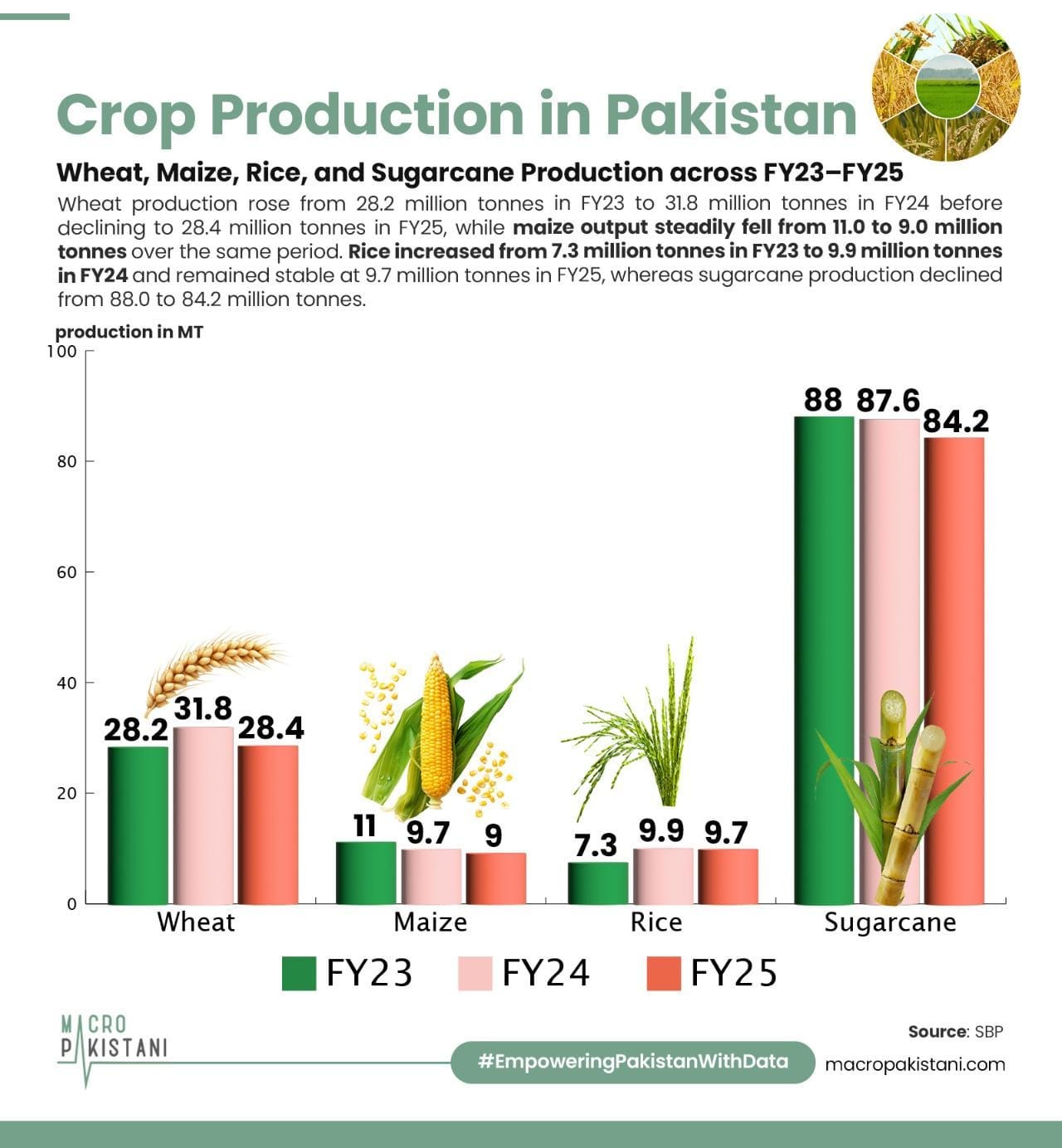
Recent crop and climate data for FY23 to FY25 underline the growing volatility facing Pakistan’s agriculture sector. Wheat production surged to a peak of 31.8 million tonnes in FY24 before slipping back in FY25, highlighting how gains remain fragile rather than structural. Maize output has steadily declined over the period, while rice has shown relative resilience, rebounding after a sharp jump in FY24. Sugarcane continues to dominate in volume terms but has followed a gradual downward trajectory, raising concerns for both farm incomes and the sugar industry’s supply chain.
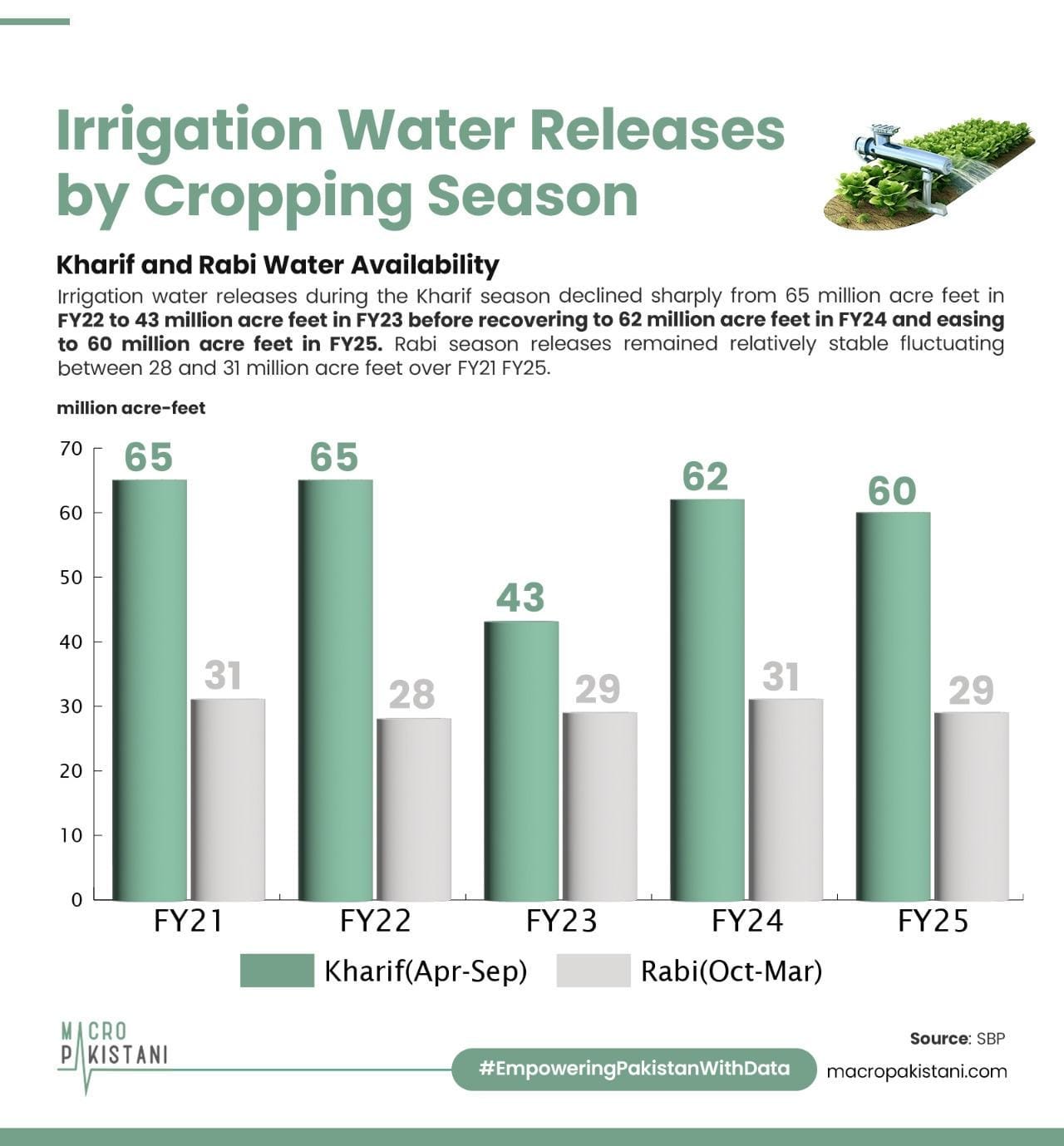
Water availability remains a critical constraint. Irrigation releases during the Kharif season fell sharply in FY23, reflecting stress on surface water systems, and although there was some recovery in FY24 and FY25, levels have yet to show sustained stability. Rabi water releases, by contrast, remained comparatively steady, masking the seasonal imbalance that disproportionately affects water-intensive summer crops such as rice, sugarcane, and cotton. This uneven water pattern reinforces production uncertainty and complicates cropping decisions for farmers already operating with thin margins.
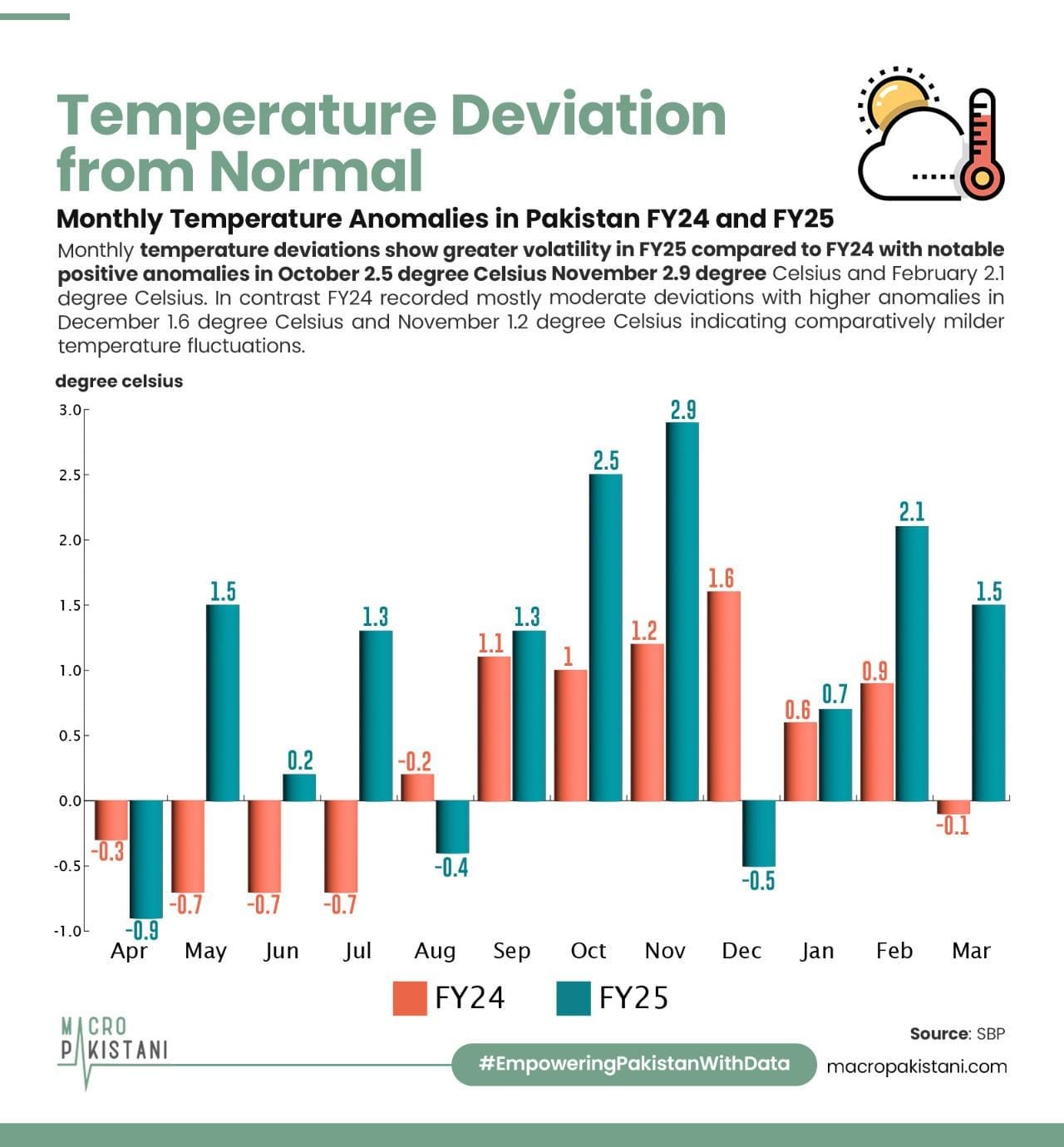
Overlaying these trends is rising climate stress. Temperature deviation data point to increasing volatility, with FY25 recording stronger positive anomalies across several months compared to FY24. These warmer-than-normal conditions amplify evapotranspiration losses, strain irrigation demand, and increase the risk of yield shocks, particularly when combined with erratic water availability. Together, fluctuating crop output, unstable Kharif water supplies, and intensifying temperature anomalies suggest that Pakistan’s agricultural performance is becoming more weather-sensitive and less predictable.
While the headline production numbers show resilience in select crops, they also signal mounting exposure to climate and water risks. Without accelerated investment in water management, climate-resilient seed varieties, and adaptive farming practices, short-term recoveries could continue to be followed by sharp reversals, leaving food security and rural incomes increasingly vulnerable to forces beyond farmers’ control.
GRAPHICS

Data Visualization & Marketing Partner: Brand Nib
For queries related to paid partnerships and collaborations, please reach out via WhatsApp:

Grateful for the ever-growing list of collaborators!
About Us: Macro Pakistani is a data-driven research platform that aims to provide a basic understanding of Pakistan’s economy. If you have an interest in contemporary news but are currently overburdened with sensationalism and specialized vocabulary, we are the platform for you.
How are we doing? Please send us any questions, comments or suggestions.